Posts

Measurements

Image
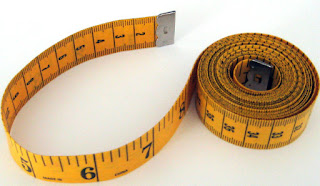
1.general physics  1.1 length and time  -i-Physical Quantity Physical Quantities A physical quantity is a property of an object that can be measured with a measuring instrument. A physical quantity is usually expressed as “a magnitude ( numerical value)  and a  physical unit or more ” Example :- Normal body temperature of a healthy human being is  37  0 C -ii-Length Measuring Length. Length is “the distance between two points in a space”. According to SI units, the length quantity is expressed in meter. There are several kinds of measuring devices used to measure quantity of length, among others, are as follows. Tools used… a-   Measuring tape. b-   Ruler c-   Vernier callipers. d-    Micrometer Measurement of length Length is measured accurately through many meth...

Pressure changes

Image
Pressure changes  The relationship between pressure and volume of a fixed amount of gas at a fixed temperature can be expressed by the formula: P 1 xV 1 =P 2 xV 2 This is also known as Boyle’s law . This is proven by the kinetic theory. If the volume is halved and the same amount of gas is on the inside of the container, twice as many impacts will occur on the surface. 

Evaporation

Image
Evaporation • Evaporation : constantly occurs on the surface of liquids. It is the escape of the more energetic particles. If the more energetic particles escape, the liquid contains fewer high energy particles and more lower energy particles so the average temperature decreases.

Thermal properties and temperature

Image
Thermal expansion of solids, liquids and gases  Solids, liquids and gasses expand when they are heated as the atoms vibrate more and this causes them to become further apart, taking up a greater volume. Everyday applications and consequences: -hot water is used to heat up a lid of a jar, to make it expand, so that it is easier to remove -the liquid in thermometers expand and contract when temperature changes, the volume of the liquid taken up in the tube can be used to find out the temperature - bimetal thermostat : when the temperature gets too high, the bimetal strip bends, to make contacts separate until the temperature falls enough, then the metal strip will become straight again and the contacts touch, to maintain a steady temperature - overhead cables have to be slack so that on cold days, when they contract, they don’t snap or detach. -gaps have to be left in bridge to allow for expansion (rollers allow the brid...

Measurement of temperature

Image
Measurement of temperature  A physical property that varies with temperature may be used for measurement of temperature for example: - liquid-in-glass thermometer : the property is thermal expansion. As temperature rises or falls, the liquid (mercury or alcohol) expands or contracts. The amount of expansion can be matched to a temperature on the scale.  Fixed point  Fixed points are definite temperatures at which something happens (when pure water freezes/ice melts: the lower fixed point or ice point and when pure water boils: the upper fixed point or steam point ) which are used to calibrate a thermometer. Sensitivity : To incr ease the sensitivity of thermometers you have to put the liquid in a narrower tube. This makes more distance for same amount of expansion of liquid. Mercury expands less than alcohol. Sensitivity can be increased by using a material that expands more during a temperature change. • Range : The maximum and minimum ...

Thermal capacity (heat capacity)

Image
Heat capacity  When something has a rise in temperature, its internal energy increases. Thermal capacity = specific heat capacity (J/Kg) × mass The specific  heat capacity  of a body is the quantity of energy needed to change the temperature of 1kg of the substance by 1°C. ... To change the temperature of a  body  means to change the average kinetic energy of its particles. Specific heat capacity = energy transferred / (mass × temperature change) c = E / (m × Δ T) An experiment can be carried out to find the specific heat capacity of a substance. You should know the power of the electric heater, the amount of time it is left on, the mass of the material being tested and the temperature change. For a liquid, it can be simply poured in, but for a solid like Aluminium, holes have to be drilled in for the heater and thermometer. Power of heater × time left on = energy supplied by heater Energy supplied by heater...

Conduction and convection

Image
Conduction  in non-metals - when heat is supplied to something, its atoms vibrate faster and pass on their vibrations to the adjacent atoms. In metals – conduction happens in the previous way and in a quicker way – some electrons are free to move, they travel randomly in the metal and collide with atoms and pass on the vibrations.  The atoms in a substance are always vibrating. When heat is applied to a substance the heat energy is given to the atoms and they vibrate and move faster and so their kinetic energy increases. The vibrating atoms bump into neighbouring atoms and pass on their kinetic energy. These atoms then pass on their kinetic energy to atoms close to them and so on. In this way the heat energy moves through the substance. Conduction takes place in solids, liquids and gases, but works best in solids as their atoms/molecules are located closer together.  Metals are the best solids for conducting heat. Metals have tightly ...

Radiation

Image
Radiation  Thermal radiation is mainly infra-red waves, but very hot objects also give out light waves. Infra-red radiation is part of the electromagnetic spectrum  thermal energy transfer by radiation does not require a medium  An emitter sends out thermal radiation. A reflector reflects thermal radiation, therefore is a bad absorber. An emitter will cool down quickly, an absorber will heat up more quickly and a reflector will not heat up quickly. Matt Black White Silver Emitter  best worst Reflector  worst best Absorber best Worst The amount of radiation emitted by a body depends on its temperature, and is proportional to  T 4 . This relation shows that as the temperature of the object increases, the amount of radiation emitted increases ...