Posts

Measurements

Image
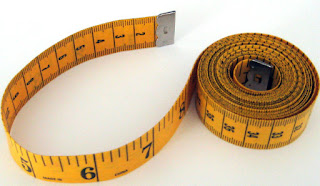
1.general physics  1.1 length and time  -i-Physical Quantity Physical Quantities A physical quantity is a property of an object that can be measured with a measuring instrument. A physical quantity is usually expressed as “a magnitude ( numerical value)  and a  physical unit or more ” Example :- Normal body temperature of a healthy human being is  37  0 C -ii-Length Measuring Length. Length is “the distance between two points in a space”. According to SI units, the length quantity is expressed in meter. There are several kinds of measuring devices used to measure quantity of length, among others, are as follows. Tools used… a-   Measuring tape. b-   Ruler c-   Vernier callipers. d-    Micrometer Measurement of length Length is measured accurately through many meth...

Energy

Image
Energy transfer    Energy form Description Kinetic energy The energy in a moving object is defined as that object’s kinetic energy. Gravitational potential energy The energy of an object, raised up against the force of gravity is that object’s Gravitational potential energy. Chemical energy The energy stored in chemical substances and which can be released in a chemical reaction is defined as chemical energy. Electrical energy The energy transferred by an electric current is called as electrical energy. Nuclear energy The energy stored in the nucleus of an atom is defined as nuclear energy. Strain energy The energy produced in an object when it is stretched or compressed is called as strain energy. Internal energy The energy of an object; the total kinetic and potential energies of its particles is defined as internal energy. Thermal (heat) energy The energy being transferred from a hotter place to a cooler place, as a result of the temperature difference between ...

Energy resources

Image
Energy resources Sun is the source of energy for all our energy resources except geothermal, nuclear and tidal 

Work and power

Image
Work • Work is done when ever a force makes something move. The unit for work is the Joule (J). 1 joule of work = force of 1 Newton moves an object by 1 metre (again, if you employ the formula its common sense)  W=Fxd Work done (J) = Force (N) x Distance (m)  Power

Pressure

Image
Pressure  The relationship between pressure, force and area: Learn above formula by heart, if definition of pressure is asked in exam just write above formula in words as Pressure = force / area Theoretical understanding of the formula: If we look at the formula, the force is in numerator and area is in denominator. If force is large and area is small then the pressure would be bigger and vice versa. As If Force = 5 N and area is 5 m 2 then pressure is P= 5/5 =1 N/m 2   or  pascal However, if force = 5 N and area is 0.5 m 2 then pressure would be P = 5 / 0.5 = 10 N/m 2 Conclusion That is why camel can walk on the desert but a beautiful lady with a high and sharp heel can not. Reason, camel’s feet are wide so area is large and camel’s weight is divided on four legs. However, the beautiful lady’s weight is divided only on two feet and whose contact area with the ground is very small due to sharp heels. Example#1:  An elephan...

States of matter

Image
States of matter Molecular model Interpret the temperature of a gas in terms of the motion of its  ​ molecules. The higher the temperature, the faster the speed of the molecules. Temperature is a measure of the average speed of the molecules. Temperature is how hot something is; heat is energy that flows from hot  ​ substances to cold substances. Describe qualitatively the pressure of a gas in terms of the motion  ​ of its   molecules. At  a constant temperature, gas molecules move at a constant average speed,  ​ so that the force of the collision is the same ( on average ). If the gas is compressed into a smaller volume, there are more frequent  ​ collisions on each unit of area, so that the total force per unit area  ​ increases and the pressure increases. If a gas expands to a greater volume at a constant temperature, the pressure  ​ decreases. If you look at smoke through a micros...

Pressure changes

Image
Pressure changes  The relationship between pressure and volume of a fixed amount of gas at a fixed temperature can be expressed by the formula: P 1 xV 1 =P 2 xV 2 This is also known as Boyle’s law . This is proven by the kinetic theory. If the volume is halved and the same amount of gas is on the inside of the container, twice as many impacts will occur on the surface. 

Evaporation

Image
Evaporation • Evaporation : constantly occurs on the surface of liquids. It is the escape of the more energetic particles. If the more energetic particles escape, the liquid contains fewer high energy particles and more lower energy particles so the average temperature decreases.